





In this edition:
- Government of Ontario announces $750M investment in STEM training
- Raw material prices decline by 1%, reversing three-month trend of increases
- Ontario leads multi-unit residential construction increase
- Greener future for construction takes root at Brock
- Tourism associations report decline in travel to the U.S.
- Lack of mentorship, poor training among challenges for new workers, survey shows
- Focus on Human Resources
Did you know you can get the GNCC’s Daily Update emailed to you? Click here to sign up.
Picture credit: LIGHTFIELD STUDIOS / Adobe Stock
Government of Ontario announces $750M investment in STEM programs
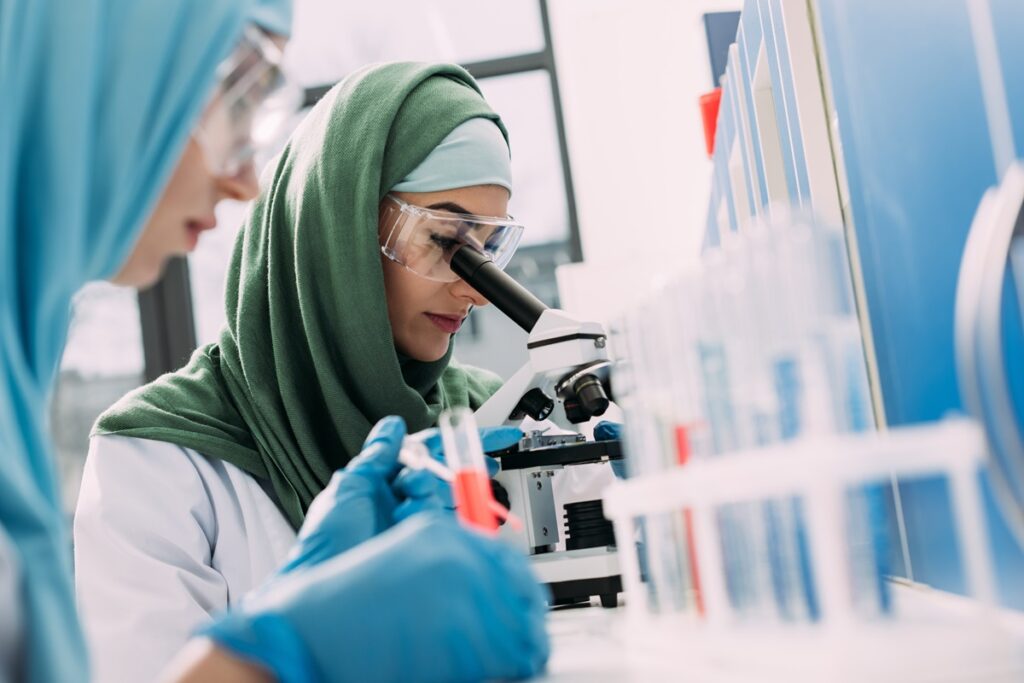
In order to protect and strengthen Ontario’s current and future workforce, the Ontario government is investing $750 million to support Science, Technology, Engineering and Mathematics (STEM) programs at colleges and universities across the province. This investment will fund up to 20,500 STEM seats per year, building a skilled, made-in-Ontario talent pool that will cement the province as one of the most competitive places in the G7 to invest, create jobs and do business.

Picture credit: jovannig / Adobe Stock
Raw material prices decline by 1%, reversing three-month trend of increases
In March, prices of products manufactured in Canada, as measured by the Industrial Product Price Index (IPPI), rose 0.5% month over month and increased 4.7% year over year. Meanwhile, prices of raw materials purchased by manufacturers operating in Canada, as measured by the Raw Materials Price Index (RMPI), declined 1.0% month over month and grew 3.9% year over year.

Picture credit: nipol / Adobe Stock
Ontario leads multi-unit residential construction increase
Investment in residential building construction increased $277.5 million to $15.7 billion in February. Investment in multi-unit construction rose $241.5 million to $8.4 billion, largely attributable to gains in Ontario (+$357.8 million) and British Columbia (+$53.1 million).
Investment in non-residential construction also increased $54.2 million to $6.8 billion, with gains being spread across its three components: institutional (+$26.7 million), commercial (+$15.1 million) and industrial (+$12.4 million).

Picture credit: Nabiru / Adobe Stock
Greener future for construction takes root at Brock
In an unassuming parking lot near Brock University’s main campus, stalks of giant bamboo have defied expectations after enduring their first Canadian winter and thriving in a climate generally considered inhospitable to their survival.
The hardy plants are being grown as part of Associate Professor of Engineering Amir Mofidi’s research on whether engineered bamboo could be produced locally as a sustainable alternative to conventional construction materials.

Picture credit: Allison / Adobe Stock
Tourism associations report decline in travel to the U.S.
The National Tour Association, American Bus Association and Student & Youth Travel Association released a study showing that international travel to the U.S. is down.
The three associations surveyed their U.S. members about inbound travel, and 51% of respondents reported that their business or destination has experienced a drop in business, bookings or visitation. A quarter of respondents reported no impact, and the rest said they were unsure or do not operate inbound travel.

Photo credit: BullRun / Adobe Stock
Lack of mentorship, poor training among challenges for new workers, survey shows
A survey released last week by Robert Half identified limited mentorship opportunities as the top challenge encountered by Canadian workers early in their careers, with 47 per cent of respondents saying they lacked a workplace peer to help guide them.
Focus on Human Resources
A Discovery Visa to attract the world’s best innovators
Top scientific and technology talent is globally mobile. Today, frontier researchers will move to whichever country they believe will best support their efforts and give them paths to commercialization.
This has been a strength for Canada. We are recognised as a great destination for researchers and are already home to some of the world’s top scientists. We’ve won five Nobel Prizes in the past decade. We boast world-class academia like the University of Toronto and new institutes like Perimeter (quantum), Vector (AI), and MILA (AI) that in less than a generation, have become global leaders.
Immigrants make up an outsized portion of these institutions. They make up 26% of our nation’s workforce but account for 35% of computer programmers, 42% of physicists, and 57% of chemists. Many of these frontier researchers come from countries that can’t offer the same opportunities for commercialization, continued funding, and quality of life.
The US has historically also been viewed as a leading country for researchers to go to, and they have been a large net importer of talent. But the recent massive research funding cuts, immigration crackdowns, and political interference in universities is starting to change that. Academics have seen funding cuts and universities are freezing spending amidst uncertainty. Now, 75% of U.S. scientists polled by Nature say they’re considering leaving the country.
Through the Daily Updates, the GNCC aims to deliver important business news in a timely manner. We disseminate all news and information we feel will be important to businesses. Inclusion in the Daily Update is not an endorsement by the GNCC.
